
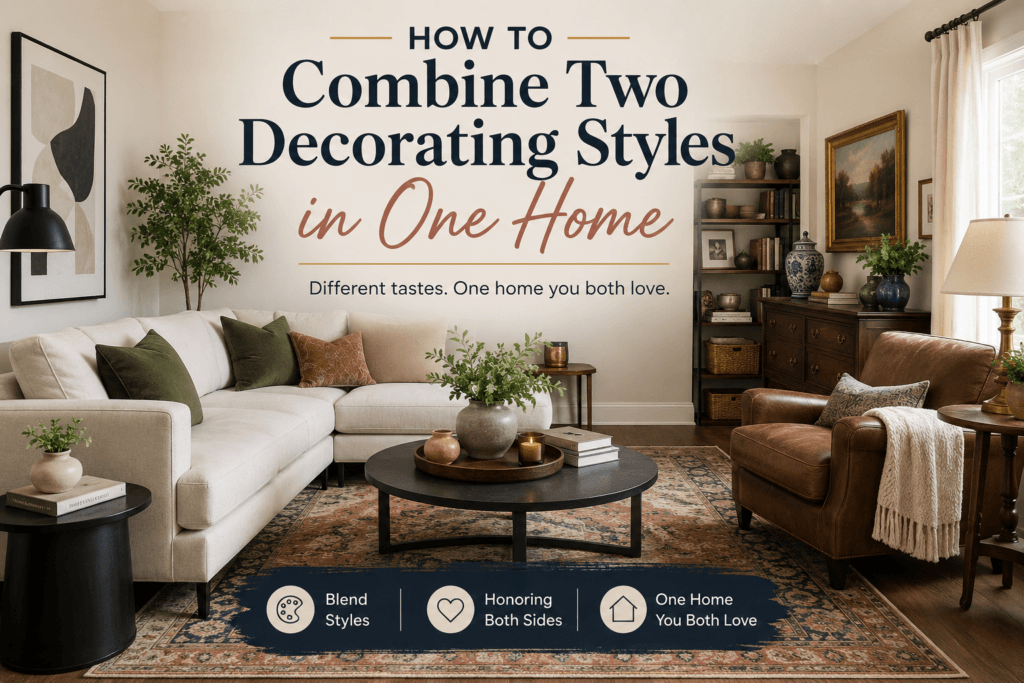
How to Combine Two Decorating Styles in One Home
You love clean lines, uncluttered rooms, and furniture that feels modern. The person you share your home with loves warm colors, collected pieces, and rooms that feel cozy and lived in. Separately, both styles can look great. Put them together, and choosing a sofa, rug, paint color, or piece of artwork can suddenly feel much more complicated.
The good news is that creating a shared home doesn’t mean one person’s taste has to win. You can combine two decorating styles by finding the colors, materials, shapes, textures, and priorities that connect them. The goal isn’t to make everything match. It’s to make the differences feel intentional.
Different Styles. One Home You Both Love.
Quick Answer: How Do You Combine Two Decorating Styles?
Start by identifying what both people genuinely like instead of focusing only on decorating labels. Choose a shared color palette, repeat a few materials or finishes throughout the room, and allow each person’s style to appear through furniture, artwork, texture, lighting, and meaningful pieces.
You don’t need a strict 50/50 split. A cohesive room simply needs enough visual connections that the different pieces feel like they belong together.
Why Different Decorating Styles Don’t Have to Clash
When two people say they have completely different decorating styles, they’re often talking about more than furniture.
One person might say, “I like minimalist rooms.” The other might say, “I want our home to feel cozy.”
Those preferences sound incompatible until you look underneath the style labels.
The person who wants minimalism may really mean, “Visual clutter stresses me out.”
The person asking for cozy may really mean, “I don’t want our home to feel cold or impersonal.”
A room with simple furniture, closed storage, warm lighting, natural materials, and comfortable textiles can satisfy both needs.
That’s why successful shared-home decorating starts by understanding the reason behind each preference rather than deciding which style is better.
The Two Styles One Home Preference Gap
We call the space between what two people want the Preference Gap.
Instead of asking, “Who gets their way?”, ask: “What is each person trying to get from this space?”
Minimalist vs. Cozy
Modern vs. Traditional
Hidden Storage vs. Easy Access
Neutral Rooms vs. Bold Color
Start With What You Both Actually Like
Before buying anything, figure out where your tastes overlap.
This sounds simple, but it’s one of the easiest steps to skip. Walking into a furniture store without any shared direction can turn a basic decision into a disagreement.
Create Separate Inspiration Boards
Each person should save several rooms they genuinely like. You can use screenshots, Pinterest boards, magazine images, social posts, or photos from places you’ve visited.
Don’t worry yet about identifying whether each room is transitional, traditional, Scandinavian, modern farmhouse, mid-century modern, or something else. Simply choose spaces that feel right to you.
Compare What You Saved
Look for similarities between the two collections. You may discover that your styles aren’t as far apart as you assumed.
Perhaps both of you repeatedly chose warm wood, comfortable seating, neutral walls, black accents, natural materials, soft lighting, or uncluttered layouts.
Ask How You Want the Room to Feel
Instead of only asking what style you like, ask whether the space should feel relaxed, bright, sophisticated, comfortable, colorful, calm, energetic, or welcoming.
Two people can disagree about furniture styles while completely agreeing that the living room should feel comfortable, relaxed, and uncluttered.
Identify Your Non-Negotiables
Compromise doesn’t mean eliminating everything one person loves.
Each person should identify a small number of objects, needs, or design preferences that genuinely matter.
- A chair inherited from a grandparent
- Artwork with sentimental value
- A collection gathered while traveling
- A favorite record player or bookshelf
- A sectional that’s particularly comfortable
- A strong need for uncluttered surfaces
- A dedicated place to display books or personal objects
Separate “This really matters to me” from “I happen to prefer this.”
When both people know what’s truly important, it’s easier to compromise on everything else.
Find a Common Thread Between Your Styles
Different furniture doesn’t automatically make a room look mismatched. Problems usually appear when nothing connects the pieces.
Give the eye something familiar to follow around the room.
Your common thread could be:
- Color
- Wood tone
- Metal finish
- Fabric
- Shape
- Texture
- Pattern
- Scale
- Repeated natural materials
Imagine one person owns a traditional wooden dresser while the other prefers contemporary furniture. You don’t automatically need to replace the dresser.
Modern artwork, a simpler lamp, restrained accessories, and another piece that repeats the dresser’s wood tone can help connect it with the rest of the room.
Ask: “What connects this piece to something else in the room?”
Choose a Shared Color Palette
Color is one of the easiest ways to connect different decorating styles.
Furniture from different eras can coexist surprisingly well when the room has a consistent color story.
A simple starting point is:
- One primary neutral
- One secondary neutral
- One or two accent colors
That doesn’t mean everything has to be beige or gray.
If one person prefers neutrals and the other loves stronger colors, larger pieces and walls can provide a calmer foundation while artwork, pillows, rugs, blankets, chairs, lamps, and accessories introduce more personality.
A consistent palette gives the eye something familiar even when furniture styles vary.
Let One Style Create the Foundation
You may see decorating rules suggesting an 80/20, 70/30, or 60/40 split between styles.
Those ideas can help you think about balance, but you don’t need to count furniture.
What matters is preventing every piece in the room from competing for attention.
For example, a room might start with:
- A simple contemporary sofa
- Neutral walls
- Streamlined storage
Then add:
- An antique side table
- A traditional rug
- Vintage artwork
- Textured pillows
The modern elements establish a calm foundation while the traditional pieces introduce history and personality.
Mix Furniture Instead of Buying Matching Sets
One of the biggest misconceptions about creating a cohesive home is that all the furniture needs to match.
It doesn’t.
A collected room can comfortably combine a modern sofa, vintage side table, traditional rug, contemporary lamp, and inherited cabinet.
The key is creating relationships between those pieces.
Perhaps black metal on the lamp appears again on the coffee table. Maybe the warm wood of an older cabinet appears again in picture frames. The sofa and rug might share a similar accent color.
Repetition makes different furniture feel intentional rather than random.
Use Texture to Bridge Different Styles
Texture is particularly useful when one person wants a clean, simple room and the other worries that simplicity will feel cold.
Keep the furniture relatively streamlined, then introduce warmth through:
- Woven rugs
- Linen curtains
- Wool or knit throws
- Leather
- Natural wood
- Woven baskets
- Textured pillows
The room can remain visually calm while still feeling comfortable and lived in.
Combine Old and New Pieces Intentionally
You don’t need to choose between an entirely modern home and one filled with traditional or vintage furniture.
Old and new pieces can make each other more interesting.
A vintage dining table beneath a contemporary pendant light can feel deliberate. Traditional furniture can gain new energy beside modern artwork. A contemporary sofa can sit next to an antique side table when color, proportion, or material connects them.
Sometimes contrast is exactly what makes a shared home feel personal.
Give Meaningful Pieces Room to Belong
When two households come together, furniture isn’t always just furniture.
A chair may have belonged to a grandparent. Artwork may remind someone of a meaningful place. A collection may represent years of travel or a hobby.
These items don’t automatically need to disappear because they don’t perfectly match a design plan.
Instead, ask:
Can we give this piece a deliberate place?
A meaningful object surrounded by breathing room often feels far more intentional than something squeezed into an already crowded space.
Meet in the Middle
Two preferences don’t have to become identical. They simply need a thoughtful bridge.
| One Preference | The Other Preference | Meet in the Middle |
|---|---|---|
| Minimalist | Cozy | Simple furniture + warm textiles and lighting |
| Modern | Traditional | Clean-lined foundation + classic accents |
| Neutral | Colorful | Neutral large pieces + controlled accent colors |
| New | Vintage | Contemporary basics + selected vintage statement pieces |
| Clutter-Free | Collected | Closed storage + designated display areas |
| Light Woods | Dark Woods | Repeated undertones + intentional contrast |
What If You Already Own Two Completely Different Sets of Furniture?
Most people aren’t decorating an empty room with an unlimited budget.
When households combine, you may already have two sofas, two dining tables, several dressers, different lamps, different artwork, and boxes filled with accessories.
Don’t start by replacing everything.
Keep
Furniture and objects you both like, pieces with meaning, and items that clearly work in your new space.
Consider
Pieces one person loves that could work better in another room, with different styling, or after changing the surroundings.
Let Go
Duplicates, badly worn furniture, items neither person particularly likes, and pieces that simply don’t fit the available space.
Then arrange what remains before buying something new.
Sometimes changing the rug, lighting, paint color, or furniture placement does more to unite a room than replacing the furniture itself.
What Should You Buy Together?
Not every purchase requires a decorating summit.
A throw pillow is different from a $2,000 sofa.
Large, expensive, or frequently used shared items deserve more discussion. That includes sofas, dining tables, mattresses, large rugs, major lighting, storage systems, appliances, and patio furniture.
1. Function
Agree on what the item actually needs to do before debating how it looks.
2. Budget
Decide on a comfortable price range before either person falls in love with something.
3. Shared Approval
Look for an option both people genuinely like and can comfortably live with.
Success doesn’t always mean both people declaring, “This is my dream sofa.”
Sometimes success is:
“We both like it. It’s comfortable. It fits the room. It works with what we already own. And it’s within our budget.”
That’s a good shared-home decision.
Common Mistakes When Combining Decorating Styles
Trying to Make Everything Match
Cohesion and matching aren’t the same thing. Repeat enough colors, materials, and shapes to connect the room without turning it into a furniture showroom.
Buying Before Agreeing on Direction
A collection of individual purchases you each liked doesn’t automatically create a cohesive room. Establish the larger direction before making expensive purchases.
Creating a “Your Side” and “My Side”
A shared room shouldn’t look like two unrelated spaces pushed together. Blend both preferences throughout the room instead.
Letting One Person Make Every Decision
One person may enjoy decorating more, but the other still lives there. Make sure the major choices reflect both people’s needs.
Keeping Everything Because You Already Own It
Combining households often produces duplicates. Keep the pieces that serve the new shared home best.
Following Decorating Rules Too Rigidly
Design ratios and formulas can provide direction, but they aren’t laws. If the room feels connected and both people feel represented, you’ve reached the more important goal.
Frequently Asked Questions
Can you mix two decorating styles in one room?
Yes. Two decorating styles can work well together when the room contains common elements connecting them. A shared color palette, repeated materials, complementary proportions, and intentional placement can help different furniture and décor feel cohesive.
What decorating styles work well together?
Many styles can complement each other. Modern and traditional, contemporary and vintage, minimalist and cozy, or Scandinavian and bohemian can all work together. Focus less on the labels and more on shared colors, materials, shapes, and the mood you want the room to create.
How do you make mismatched furniture look intentional?
Create visual connections between the pieces. Repeat a wood tone, metal finish, fabric color, shape, or accent color elsewhere in the room. Rugs, artwork, lighting, and textiles can also help connect furniture from different styles or periods.
Can modern and traditional décor work together?
Yes. Modern furniture can provide clean lines while traditional pieces add warmth, detail, and history. A consistent palette and repeated materials can help both styles feel connected.
Should every room in your home have the same style?
No. Rooms don’t have to be identical. Repeating a few colors, finishes, materials, or design elements throughout the home can create continuity while still allowing each room to have its own personality.
How do you compromise when you both have different decorating styles?
Start by understanding what each person needs from the space rather than debating style labels. Find the overlapping colors, materials, moods, and functions you both appreciate. Keep a few meaningful non-negotiables for each person and make major shared purchases together.
One Home Doesn’t Need One Style
Combining two decorating styles isn’t about deciding whose taste is better. It also shouldn’t create a bland compromise that neither person loves.
Start with what you agree on. Understand what matters to each person. Repeat a few colors and materials. Give meaningful pieces room to belong. And allow your home to develop over time.
Eventually, you may stop seeing the room as “your style plus their style.” It simply becomes your home.
Different Styles. One Home You Both Love.
Explore Our Picks